Wage Garnishment and Your Paycheck
How wage garnishment affects your paycheck: federal limits for ordinary debt (25%), child support (up to 50-65%), tax levies, and what disposable earnings means.
Wage garnishment is a court or agency order that makes your employer withhold part of your pay to repay a debt. Federal law limits how much can be taken, and your state may limit it further.

What Is Wage Garnishment?
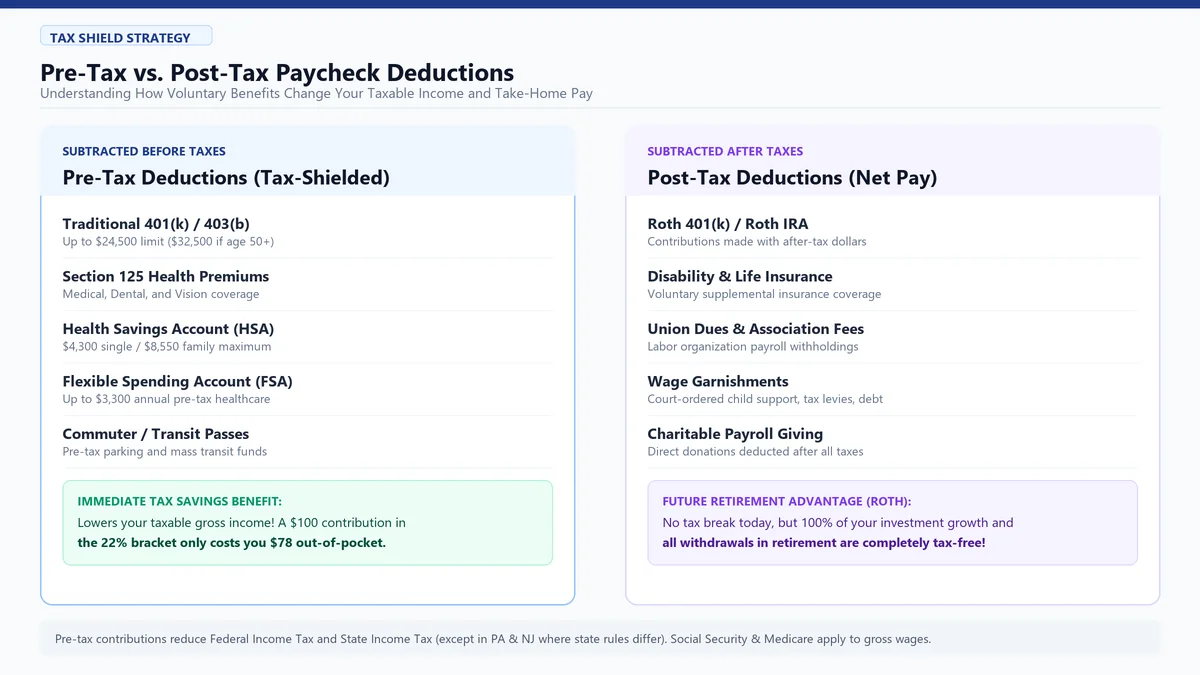
Garnishment is an order requiring your employer to send part of your earnings to a creditor or agency. It appears on your pay stub as a post-tax deduction, after taxes and before net pay.
How Much Can Be Garnished for Ordinary Debt?
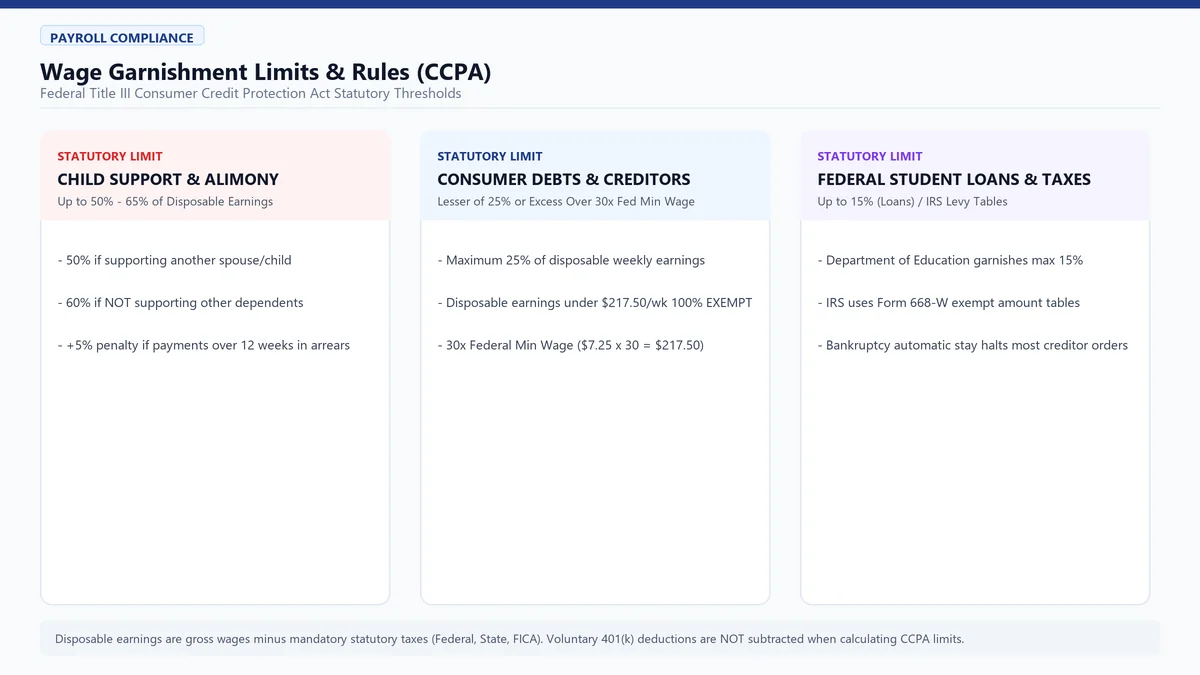
Under the federal Consumer Credit Protection Act, garnishment for most consumer debts is limited each week to the lesser of two amounts:
- 25% of your disposable earnings, or
- the amount by which weekly disposable earnings exceed 30 times the federal minimum wage ($7.25), which is $217.50.
If disposable earnings are $217.50 or less, nothing can be garnished. If they are $290 or more, the cap is 25%.
What Are Disposable Earnings?
Disposable earnings are what is left after legally required deductions such as federal, state and local taxes and your share of Social Security and Medicare. Voluntary deductions like health insurance or a 401(k) are generally not subtracted first.

Child Support and Alimony Garnishment
Support orders can take more: up to 50% of disposable earnings if you support another spouse or child, and up to 60% if you do not. An extra 5% may apply if payments are more than 12 weeks behind, so the limit can reach 55% or 65%.
Other Garnishments: Taxes, Student Loans, Bankruptcy
Different rules apply to unpaid federal taxes (IRS levies), defaulted federal student loans (administrative wage garnishment) and bankruptcy orders. The 25% cap above does not apply to all of these, so check the agency notice. Some states also cap garnishment below the federal maximum, and the lower limit generally controls.
Employee Protections
An employer cannot fire you because your pay is garnished for a single debt. If you receive a garnishment notice, read the order, confirm it is valid and consider talking to a legal aid office or attorney.
How Garnishment Changes Your Take-Home Pay
Estimate net pay in the paycheck calculator first, then subtract the garnishment. Because disposable earnings are measured after taxes, a higher tax withholding lowers the cap slightly.
Frequently Asked Questions
Can my whole paycheck be garnished?
No. Federal law caps garnishment, and at least the lower of the limits above must stay in your pay for most consumer debts.
What is the federal minimum wage used in garnishment?
The $217.50 threshold uses $7.25, the current federal minimum wage, times 30.
Does garnishment apply to bonuses?
Yes. Bonuses count as earnings, and the garnishment limits apply to disposable earnings in the pay period they are paid.
Can more than one garnishment be taken at the same time?
Yes, but total garnishment is capped, with child support generally taking priority. Rules vary by state.
Do state rules differ?
Yes. Some states protect more of your wages or ban garnishment for certain debts. If a state limit is lower than the federal limit, the lower amount applies.
How these numbers are figured: 2026 IRS withholding rules (Publication 15-T) and state figures last verified September 2026. Results are estimates. Read the full methodology and sources.