No Tax on Overtime and Tips: What It Means for Your Paycheck
How the 2025-2028 overtime and tips deductions work: $12,500 and $25,000 limits, income phase-outs, who qualifies, and how they affect your paycheck.
A 2025 federal law created deductions for qualified overtime pay and tips. They do not make these earnings tax-free at the paycheck. They reduce the income tax you owe when you file.

Quick Answer
Workers can deduct up to $12,500 of qualified overtime premium pay ($25,000 if married filing jointly) and up to $25,000 of qualified tips, for tax years 2025 through 2028. Both deductions phase out when modified adjusted gross income (MAGI) exceeds $150,000 ($300,000 joint).
Key Rules at a Glance
| Rule | Overtime deduction | Tips deduction |
|---|---|---|
| Maximum deduction | $12,500 ($25,000 joint) | $25,000 |
| Phase-out begins | MAGI over $150,000 ($300,000 joint) | MAGI over $150,000 ($300,000 joint) |
| Tax years | 2025 through 2028 | 2025 through 2028 |
| What qualifies | Overtime pay required by the FLSA, the portion above your regular rate | Voluntary cash or charged tips in customarily tipped jobs, and tip sharing |
| Other requirements | SSN on the return; married couples file jointly | SSN on the return; married couples file jointly |
Source: IRS guidance on the 2025 tax law. See the IRS overview for updates.
Does It Change My Paycheck Withholding?
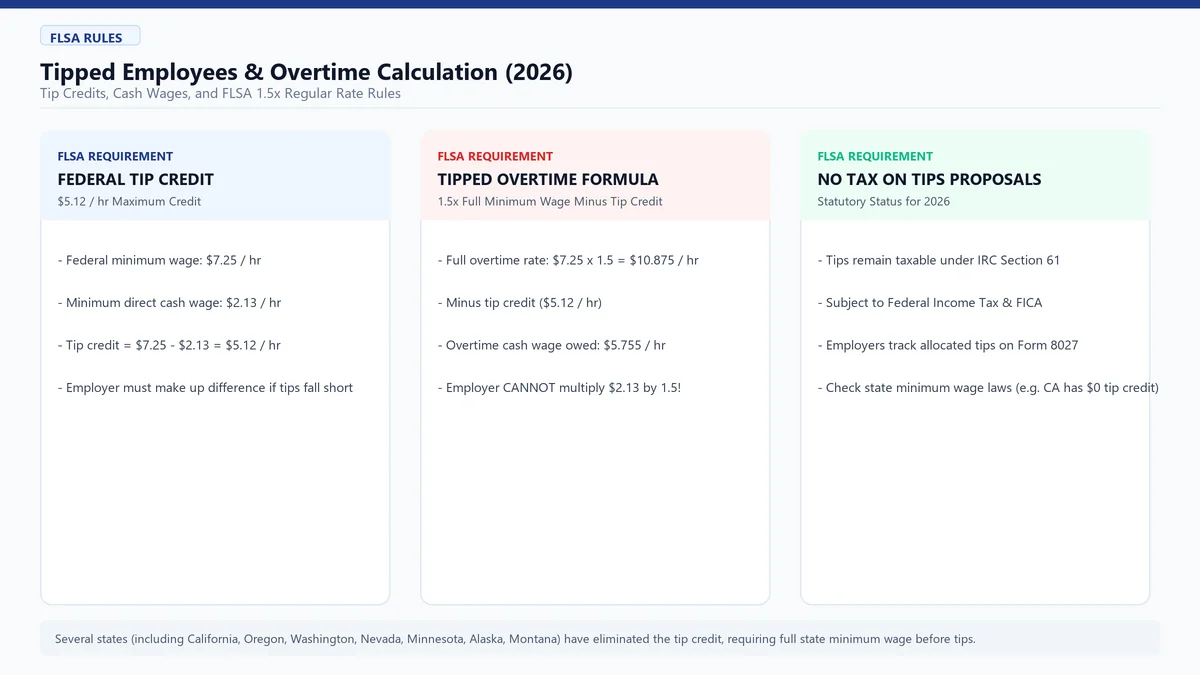
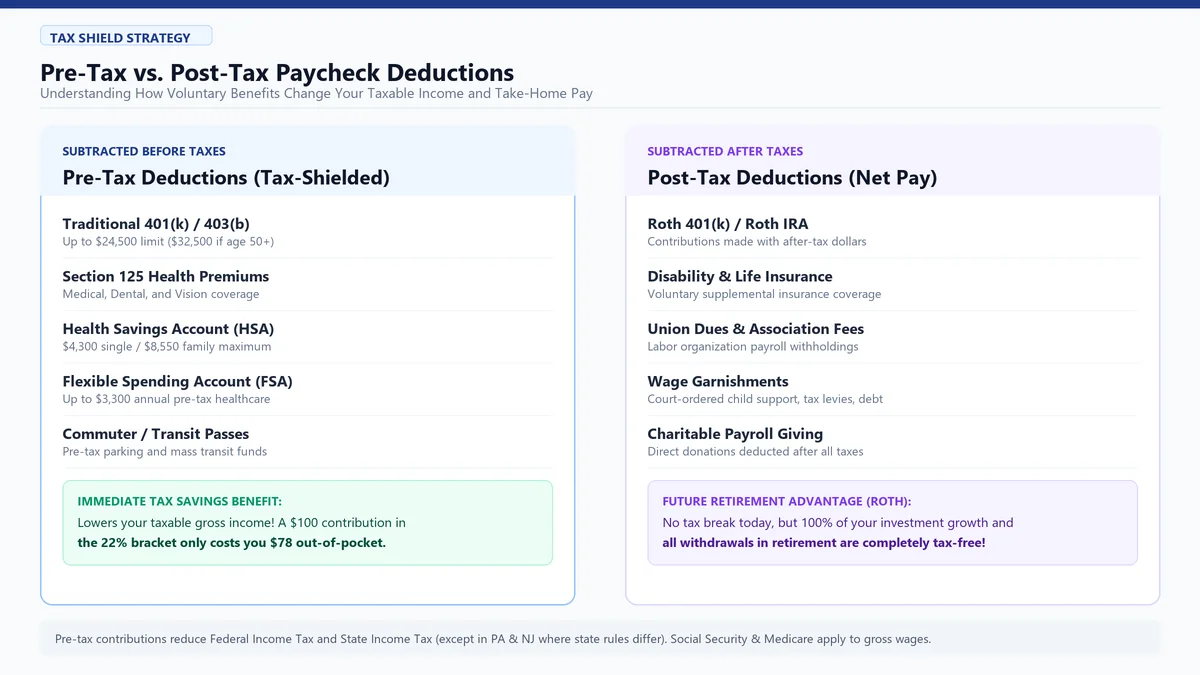
These are deductions claimed on your tax return, so they show up as a lower tax bill or larger refund, not a bigger check. The IRS material we reviewed did not describe changes to withholding, so confirm with your employer or the latest IRS Form W-4 guidance. Social Security and Medicare are figured separately and still apply to overtime and tips.

Only the Overtime Premium Counts
Only the half in "time-and-a-half" qualifies. If you earn $20 an hour and $30 for overtime, $10 per overtime hour is the qualified premium, not the full $30. Overtime that is not required by the FLSA, such as some state-law-only or contractual overtime, may not qualify.
Example
A single worker earning $20 an hour works 10 overtime hours a week for 50 weeks. The overtime premium is $10 x 10 x 50 = $5,000, well within the $12,500 cap, so taxable income falls by up to $5,000 if income is under the phase-out. At a 12% marginal rate that is about $600 less federal tax.
How to Use This With the Calculator
The overtime paycheck calculator shows withholding before these deductions. Treat any savings as an extra at tax time, and confirm eligibility on your return or with a tax professional.
Frequently Asked Questions
Is overtime pay tax-free now?
No. Overtime is still taxable, but a portion (the premium) may be deductible on your return through 2028.
Do overtime and tips still have FICA taxes?
Yes. The deductions apply to income tax and do not remove Social Security and Medicare withholding.
Who qualifies for the tips deduction?
Employees and self-employed people in occupations that customarily receive tips, with certain exclusions such as specified service trades or businesses.
Can I claim both deductions?
Yes, if you qualify for each. Each has its own limit and income phase-out.
When does it end?
The deductions apply for tax years 2025 through 2028 under current law.
How these numbers are figured: 2026 IRS withholding rules (Publication 15-T) and state figures last verified September 2026. Results are estimates. Read the full methodology and sources.