Filing Status and Your Paycheck Taxes
How filing status sets your 2026 standard deduction, tax brackets and paycheck withholding. Compare Single, Married Filing Jointly and Head of Household.
Your tax filing status is one of the most significant factors determining how much federal and state income tax is deducted from your paycheck. In 2026, your filing status sets your standard deduction threshold and dictates the income levels at which higher marginal tax brackets begin. Below is the complete guide to how filing status affects your take-home pay.

The 5 Tax Filing Statuses Recognized by the IRS
The Internal Revenue Service recognizes five distinct filing statuses under US tax law:
- Single: Unmarried, legally separated, or divorced individuals as of December 31 of the tax year.
- Married Filing Jointly (MFJ): Married couples who combine their income and deductions on a single joint return.
- Married Filing Separately (MFS): Married individuals who choose to file independent tax returns.
- Head of Household (HOH): Unmarried individuals who pay more than half the cost of maintaining a household for a qualifying dependent child or relative.
- Qualifying Surviving Spouse (QSS): Widows/widowers with dependent children for up to two years following the death of a spouse.
2026 Standard Deduction & Tax Bracket Impact by Filing Status
Your filing status sets the size of your standard deduction and the width of your progressive tax brackets:
| Filing Status | 2026 Standard Deduction | 10% Bracket Threshold | 12% Bracket Threshold | 22% Bracket Threshold |
|---|---|---|---|---|
| Single | $15,700 | $0 to $11,925 | $11,925 to $48,475 | $48,475 to $103,350 |
| Married Filing Jointly | $31,400 | $0 to $23,850 | $23,850 to $96,950 | $96,950 to $206,700 |
| Head of Household | $23,500 | $0 to $17,000 | $17,000 to $64,850 | $64,850 to $103,350 |
| Married Filing Separately | $15,700 | $0 to $11,925 | $11,925 to $48,475 | $48,475 to $103,350 |
Paycheck Comparison: $75,000 Salary Across Single vs Married vs Head of Household
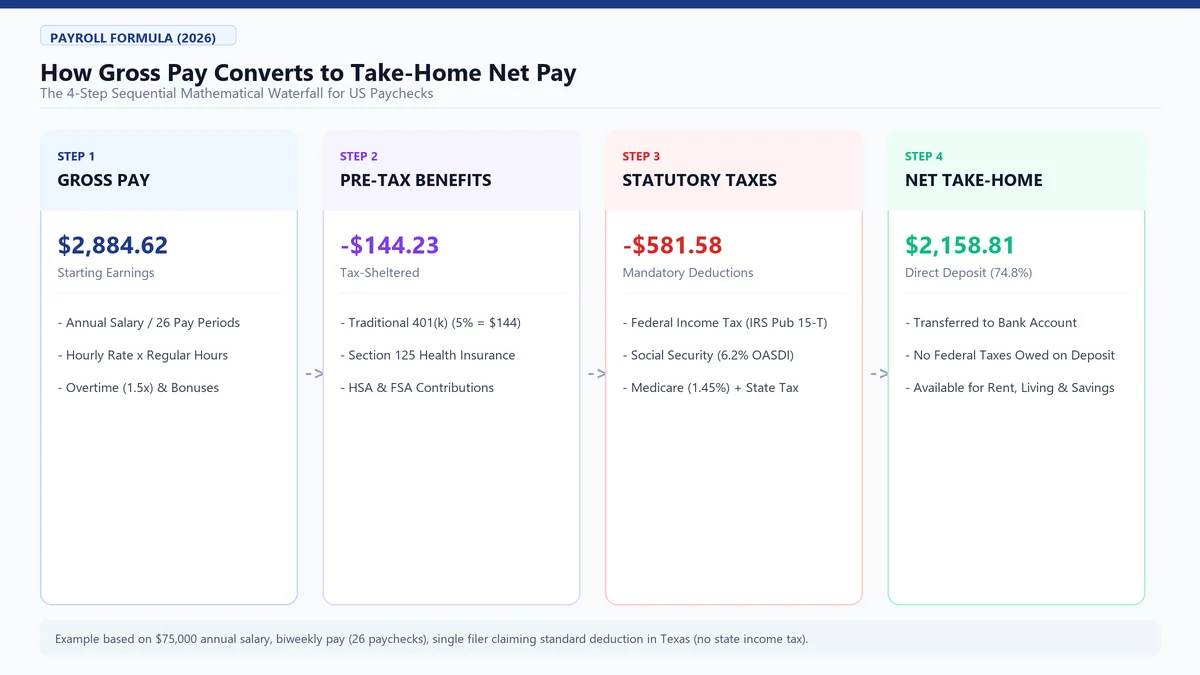
The table below demonstrates how the exact same $75,000 annual salary ($2,884.62 biweekly gross) translates into net take-home pay across different filing statuses in Texas (0% state tax):
| Filing Status | Biweekly Gross | Federal Withholding | FICA (6.2% + 1.45%) | Net Take-Home Pay | Annual Net Difference vs Single |
|---|---|---|---|---|---|
| Single | $2,884.62 | $332.80 | $220.67 | $2,331.15 / check | Baseline ($0) |
| Head of Household (1 Child) | $2,884.62 | $174.50 | $220.67 | $2,489.45 / check | +$4,115.80 / yr |
| Married Filing Jointly (Sole Earner) | $2,884.62 | $156.40 | $220.67 | $2,507.55 / check | +$4,586.40 / yr |

Head of Household Status: Requirements & Tax Advantages
Head of Household provides substantial tax savings compared to Single filing status:
- Eligibility Rules: You must be unmarried or considered unmarried on the last day of the year, pay more than 50% of the annual cost of maintaining a home, and have a qualifying dependent child or relative living with you for more than half the year.
- Tax Benefit: You receive a $23,500 standard deduction ($7,800 higher than single filers) and wider 10% and 12% marginal tax brackets, saving thousands of dollars in annual income tax.
The Two-Earner Marriage Penalty & Form W-4 Step 2 Checkbox
When both spouses work, claiming Married Filing Jointly without checking Step 2(c) creates significant underwithholding. Both employers apply the full $31,400 standard deduction as if each spouse were the sole household earner. Checking Step 2(c) or adjusting Step 4(c) ensures withholding matches joint combined tax brackets.
Which Status Should You Choose?
Choose the status you expect to use when you file your tax return. Married couples can file jointly or separately. Unmarried people with a qualifying dependent may use head of household, which has a larger standard deduction and wider brackets than single. Someone unmarried with no dependents files as single.
Head of Household Requirements
To qualify you must be unmarried (or considered unmarried) on the last day of the year, pay more than half the cost of keeping up a home, and have a qualifying person live with you for more than half the year. A child, parent or other relative may qualify in different ways. Misusing the status can trigger penalties, so read the IRS instructions.
Filing Status and State Tax
Most states use your federal filing status. The standard deduction and bracket thresholds differ by state. On the state pages we show federal and state tax for single, married filing jointly and head of household so you can see the impact where you live.
Frequently Asked Questions
How does my filing status change my paycheck taxes?
Your filing status determines your standard deduction and tax brackets. A Married Filing Jointly status reduces federal withholding significantly compared to Single status for the same wage level.
What are the qualifications for Head of Household in 2026?
You must be unmarried on December 31, pay over half the cost of maintaining your home for the year, and live with a qualifying dependent (child or relative) for more than half the year.
Why is less tax withheld when I select Married Filing Jointly?
Married Filing Jointly provides double the standard deduction ($31,400 in 2026) and twice as wide tax brackets, reducing the amount of federal income tax withheld per paycheck.
Should two working spouses select Married or Single on Form W-4?
Two working spouses can select Married Filing Jointly AND check the box in Step 2(c), which applies withholding brackets similar to Single filers to prevent underwithholding.
What is the standard deduction for Head of Household in 2026?
In 2026, the standard deduction for Head of Household is $23,500 ($7,800 higher than the single standard deduction of $15,700).
Can I change my filing status on my W-4 mid-year?
Yes. You can submit an updated Form W-4 to your employer anytime your marital status changes or you qualify for a different filing status.
How these numbers are figured: 2026 IRS withholding rules (Publication 15-T) and state figures last verified September 2026. Results are estimates. Read the full methodology and sources.