Paycheck Deductions Explained: Pre-Tax & After-Tax
Learn the difference between pre-tax and after-tax paycheck deductions in 2026, including 401(k), health insurance, HSA, FSA, union dues, and garnishments.
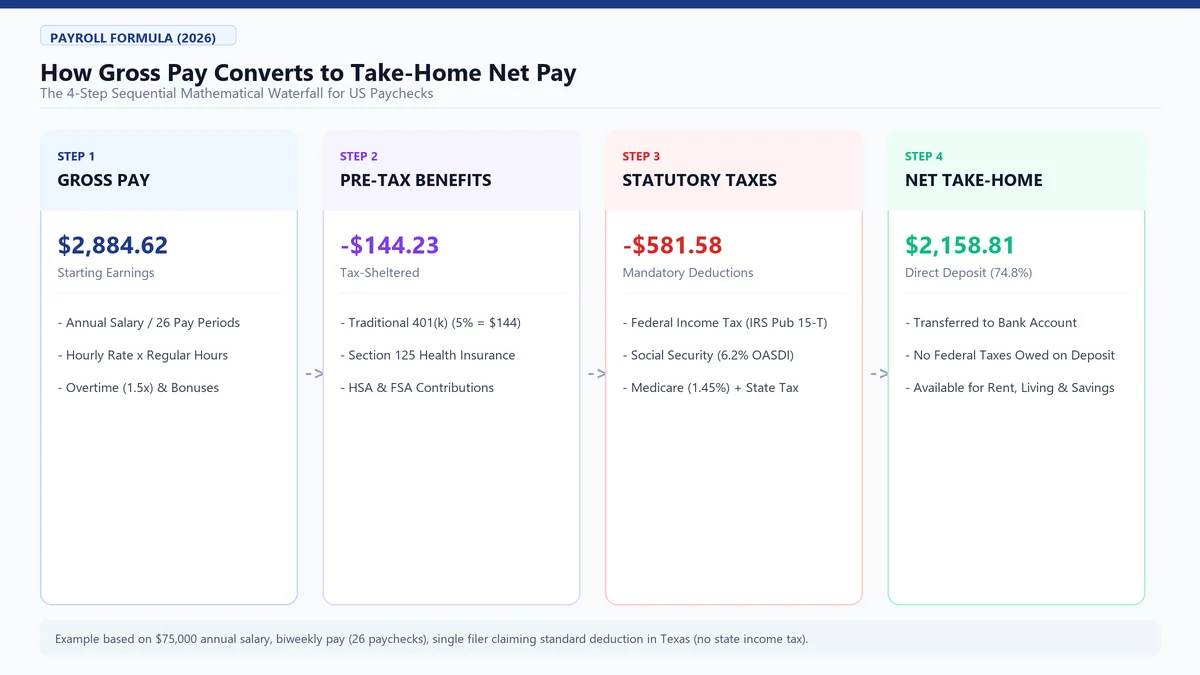
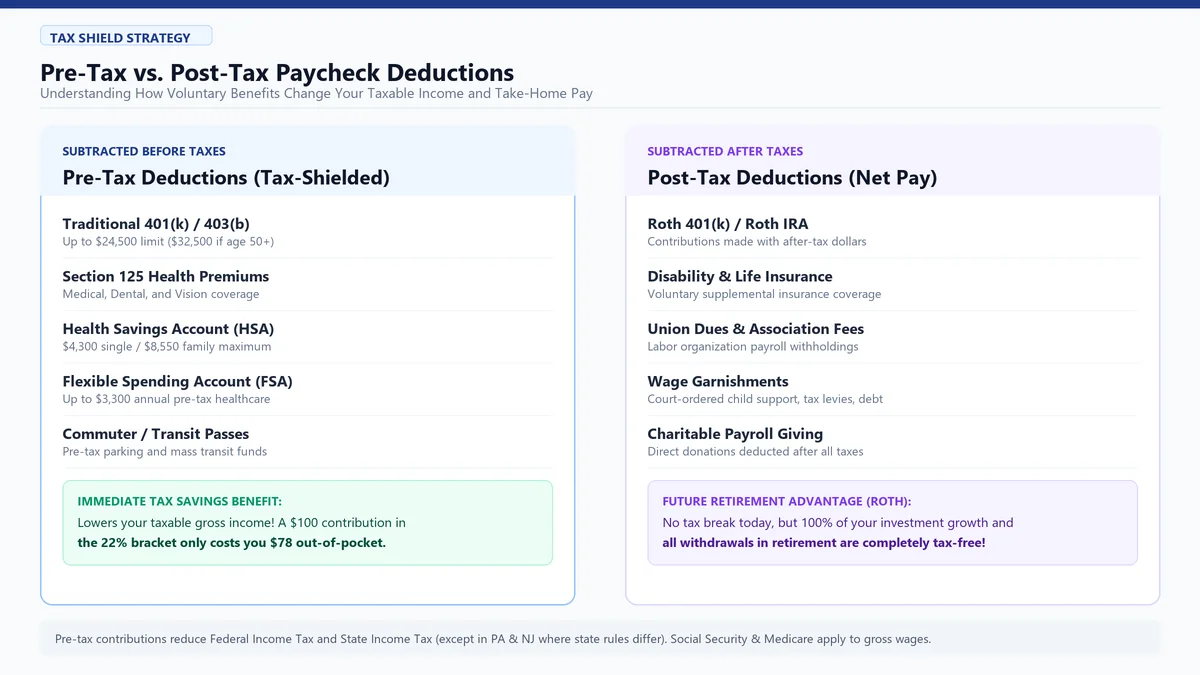
Paycheck deductions represent the amounts subtracted from your gross earnings before your net take-home pay is deposited. These deductions fall into two broad categories: pre-tax benefit elections (which shelter income from taxes) and post-tax deductions (which are paid with after-tax dollars). Below is the complete guide to optimizing your deductions in 2026.

Pre-Tax vs After-Tax Deductions: Side-By-Side Comparison
The table below breaks down the structural differences between pre-tax and after-tax paycheck deductions:
| Feature | Pre-Tax Deductions | After-Tax (Post-Tax) Deductions |
|---|---|---|
| When Subtracted | Subtracted from gross wages before payroll taxes are computed. | Subtracted from net pay after all statutory taxes have been calculated. |
| Tax Benefit | Lowers current-year taxable income, reducing federal and state income taxes immediately. | No current-year tax reduction; may provide tax-free growth (Roth) or cover personal obligations. |
| Common Examples | Traditional 401(k), Section 125 Medical/Dental/Vision, HSA, Healthcare FSA, Transit. | Roth 401(k), voluntary life insurance, union dues, 529 payroll plans, wage garnishments. |
| FICA Tax Impact | Section 125 health/HSA premiums reduce FICA (7.65%); traditional 401(k) does not. | Does not reduce FICA taxes. |
2026 Statutory Pre-Tax Contribution Limits Reference Table
Maximizing pre-tax contributions shelters income from both federal and state tax brackets. Below are the official IRS limits for 2026:
| Benefit Account | 2026 Annual Statutory Limit | Max Biweekly Check (26 Checks) |
|---|---|---|
| Traditional 401(k) / 403(b) | $24,500 ($32,500 for age 50+) | $942.31 / check ($1,250.00 age 50+) |
| Health Savings Account (HSA) — Individual | $4,400 ($5,400 for age 55+) | $169.23 / check |
| Health Savings Account (HSA) — Family | $8,750 ($9,750 for age 55+) | $336.54 / check |
| Healthcare Flexible Spending Account (FSA) | $3,400 | $130.77 / check |
| Commuter / Qualified Parking & Transit | $3,900 ($325/month) | $150.00 / check |
Why Pre-Tax Deductions Do Not Reduce Take-Home Pay Dollar-For-Dollar
One of the greatest advantages of pre-tax deductions is the tax savings cushion. Because pre-tax dollars reduce your taxable gross wage base, every dollar contributed reduces your tax bill:
- The Mathematical Proof: If you earn in the 22% federal bracket and pay 5% in state tax, your marginal tax rate is 27%.
- Net Take-Home Cost: Contributing $100 to a traditional 401(k) reduces your taxable income by $100, saving you $27 in taxes immediately on that pay period.
- Actual Paycheck Reduction: Your net take-home pay only drops by $73.00 — yet you saved a full $100.00 in your retirement account.

Wage Garnishments & Child Support: Statutory Deduction Priority Rules
When an employee is subject to court-ordered wage garnishments, federal law (Title III of the Consumer Credit Protection Act) regulates deduction limits:
- General Commercial Debt Garnishments: Capped at the lesser of 25% of disposable earnings or the amount by which weekly disposable earnings exceed 30 times federal minimum wage ($217.50).
- Child Support & Alimony Orders: Garnishments can reach up to 50% of disposable earnings (if supporting a second spouse/child) or up to 65% (if in arrears over 12 weeks).
- Federal Tax Levies: The IRS calculates exempt amounts based on standard deductions and filing status, garnishing all remaining disposable wages until the tax debt is satisfied.
Common Post-Tax Deductions
- Roth 401(k) or Roth 403(b) contributions
- Union dues and professional fees
- Wage garnishments and child support orders
- After-tax life or disability insurance
- Charitable payroll giving (deducted after tax on your paycheck, deducted on your return if you itemize)
How to Model Deductions in the Calculator
Open "More options" and enter each deduction as a per-paycheck amount: 401(k), health insurance and HSA are pre-tax, while "Other after-tax" covers everything else. The result card shows each line, so you can see how take-home pay changes when you increase a contribution.
Should You Increase or Decrease Deductions?
Increase them when you want more tax-advantaged savings and can afford lower cash flow. Decrease them if your budget is tight, but keep enough 401(k) to earn any employer match. Health-plan choices deserve a yearly look because premiums, deductibles and HSA eligibility change at open enrollment.
Garnishments and Other Post-Tax Deductions
Court-ordered deductions come out after taxes and are capped by federal law. Details: wage garnishment and your paycheck.
Frequently Asked Questions
What is the difference between pre-tax and post-tax deductions?
Pre-tax deductions are subtracted from your gross wages before taxes are calculated, reducing current-year income tax. Post-tax deductions are subtracted after all taxes are computed and do not lower taxable wages.
Which pre-tax deductions reduce Social Security and Medicare taxes?
Section 125 Cafeteria plan deductions — such as health insurance premiums, HSA contributions, and Healthcare FSAs — reduce FICA taxes. Traditional 401(k) contributions do not reduce FICA taxes.
What is the 2026 limit for pre-tax 401(k) contributions?
In 2026, the elective deferral limit for a 401(k) or 403(b) is $24,500, plus an additional $8,000 catch-up contribution for workers age 50 or older ($32,500 total).
How much does a $200 pre-tax deduction reduce my paycheck?
If your combined federal and state marginal tax rate is 25%, a $200 pre-tax contribution saves $50 in taxes, reducing your actual net take-home pay by only $150.00.
Are union dues pre-tax or post-tax?
Under current federal tax law (TCJA), employee union dues are deducted on a post-tax basis and are not deductible on federal Form 1040.
What is the maximum amount that can be garnished from a paycheck?
For ordinary commercial consumer debts, federal law limits wage garnishments to 25% of disposable earnings. Child support garnishments can legally reach 50% to 65%.
How these numbers are figured: 2026 IRS withholding rules (Publication 15-T) and state figures last verified September 2026. Results are estimates. Read the full methodology and sources.