Gross-Up Explained: Working Out Gross Pay From Net Pay
How a gross-up works: the formula, bonus gross-ups and worked 2026 examples. To run the numbers yourself, use the net to gross calculator.
A paycheck calculator goes from gross to net. Net-to-gross does the reverse: you choose the take-home amount you want and find the gross pay that produces it.

What Net-To-Gross Means
Net-to-gross, often called a gross-up, calculates the gross pay needed so that after taxes and deductions you receive a specific net amount. Employers use it for sign-on bonuses, relocation payments and pay agreements stated as take-home.
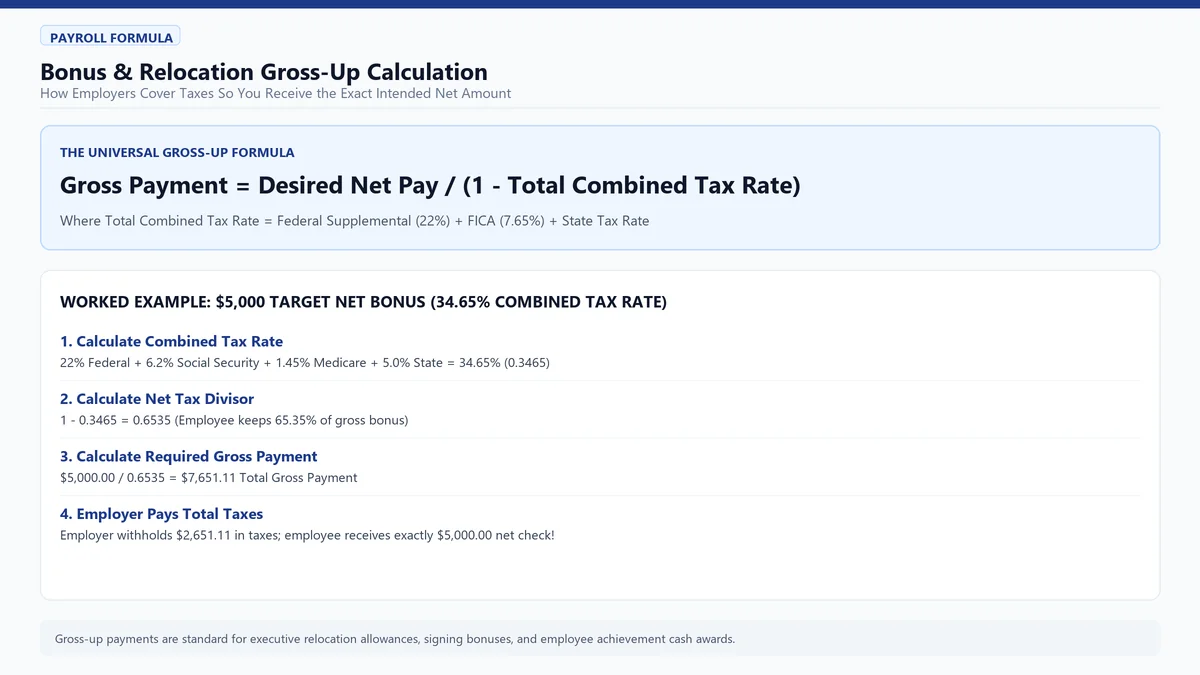
The Gross-Up Formula
For a flat-rate payment such as a bonus:
Gross = Net / (1 - total withholding rate)
With the 22% federal flat rate, 7.65% FICA and no state tax, the total rate is 29.65%. To deliver a $1,000 bonus: $1,000 / 0.7035 = about $1,421.46 gross. Add a state supplemental rate to the denominator if your state taxes bonuses.
Gross-Up for Regular Pay
Regular pay is progressive, so there is no single rate. The gross is found by testing values until net matches the target. Using this site's 2026 engine for a single filer in Texas, paid biweekly with no deductions:
| Target net per check | Gross per check needed |
|---|---|
| $1,000.00 | $1,140.20 |
| $2,000.00 | $2,384.76 |

How to Do It With the Paycheck Calculator
- Open the calculator for your pay frequency and state.
- Enter a guess for your gross salary.
- Compare net pay per check with your target.
- Raise or lower the salary until the net matches.
When Gross-Ups Matter
A gross-up increases taxable pay, so the employer also pays extra payroll tax. Taxable relocation and gift-card payments are common cases, and companies usually run the gross-up in payroll software.
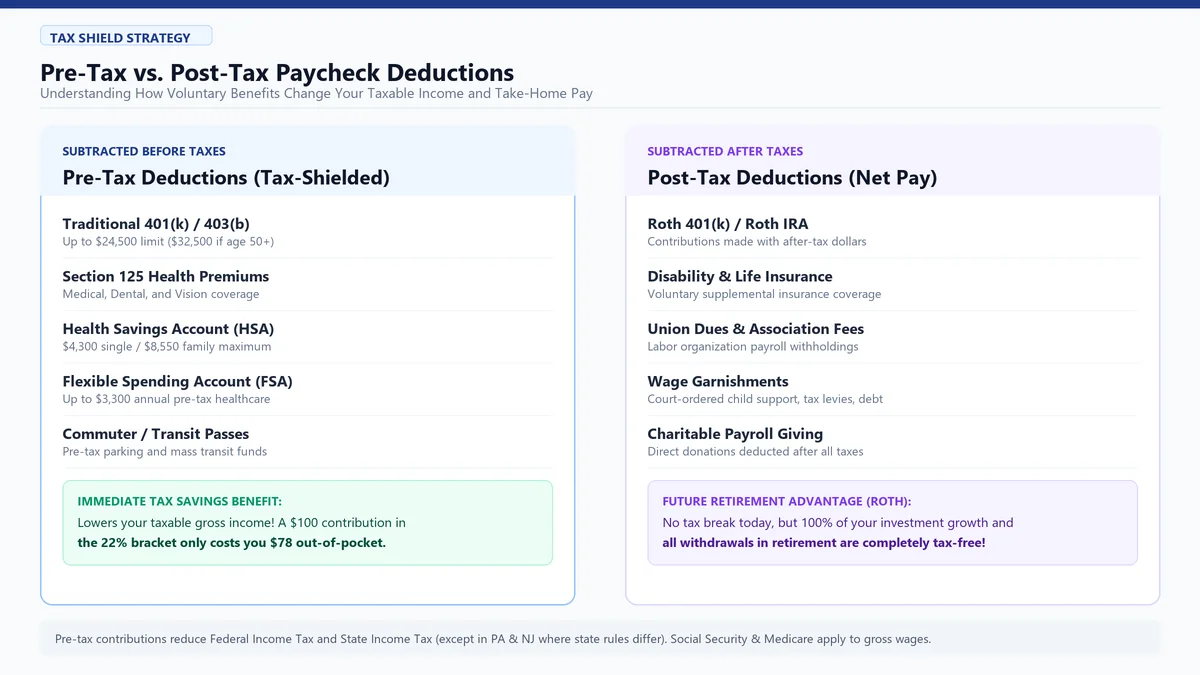
Net-To-Gross vs Salary Needed for a Target Monthly Take-Home
If your goal is a salary for a target monthly take-home, use the same approach with the monthly calculator. Your state, filing status and deductions change the answer noticeably.
Frequently Asked Questions
What is a gross-up?
A gross-up raises a payment so that, after tax, the recipient gets a specific net amount.
How do you calculate gross from net pay?
Divide net pay by (1 minus the total withholding rate) for flat-rate pay. For regular pay, test gross amounts in a calculator until the net matches.
Is a gross-up the same as a raise?
No. A gross-up covers taxes on a specific payment. A raise changes your ongoing pay.
Why is the gross-up higher than the bonus I want?
Because the gross amount is taxed. The gross-up must cover both your desired net and the tax on the extra pay.
How these numbers are figured: 2026 IRS withholding rules (Publication 15-T) and state figures last verified September 2026. Results are estimates. Read the full methodology and sources.