How to Read a Pay Stub
Learn how to read a pay stub line by line: gross pay, year-to-date totals, FICA, withholding, pre-tax deductions and net pay, plus what to check each payday.
A pay stub shows how gross pay became net pay. Once you know the layout, it takes a minute to confirm that your taxes, deductions and hours are right.
What a Pay Stub Contains
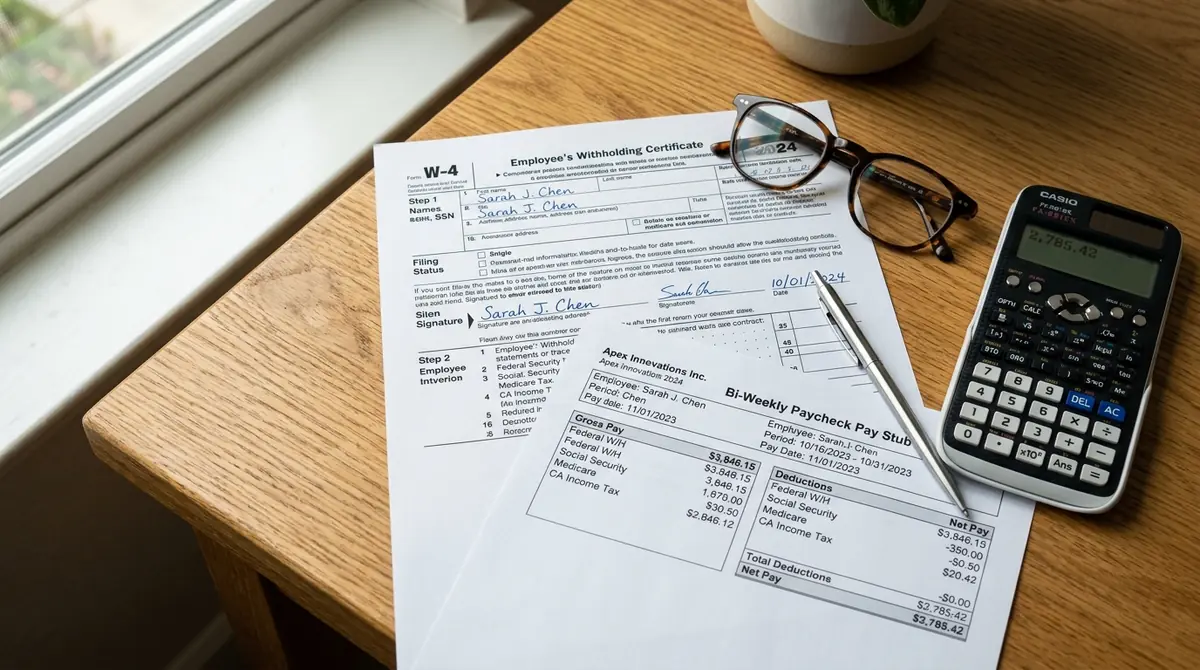
A pay stub (or earnings statement) lists the pay period, your gross earnings, every deduction and your net pay, with year-to-date totals beside each line. Employers may deliver it on paper or electronically.
Pay Stub Terms and What They Mean
| Line on the stub | What it means |
|---|---|
| Gross pay | Total earned before anything is withheld. Includes regular pay, overtime, bonuses and tips reported. |
| FITW / Fed Tax | Federal income tax withheld, based on your W-4 and pay period. |
| OASDI / Soc Sec | Social Security tax, 6.2% of wages up to $184,500 in 2026. |
| MED / Medicare | Medicare tax, 1.45% of all wages, plus 0.9% above $200,000. |
| State / SIT | State income tax withheld. Not applicable in states with no income tax. |
| SDI / PFML / FLI | Employee-paid state disability or paid family leave programs where they exist. |
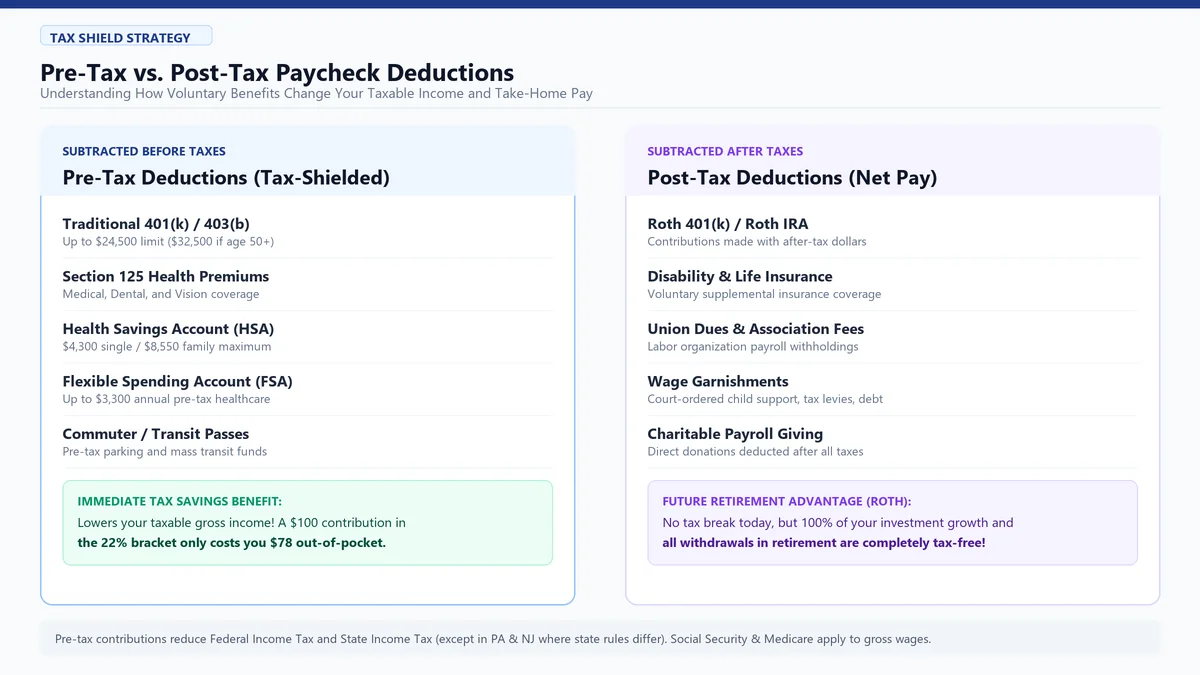
| Pre-tax deductions | Traditional 401(k), health premiums, HSA and FSA. These lower taxable wages. |
| Post-tax deductions | Roth 401(k), union dues, garnishments and similar items taken after tax. |
| YTD | Year-to-date total for each line since January 1. |
| Net pay | Your take-home amount, what reaches your bank account. |
How Gross Pay Becomes Net Pay
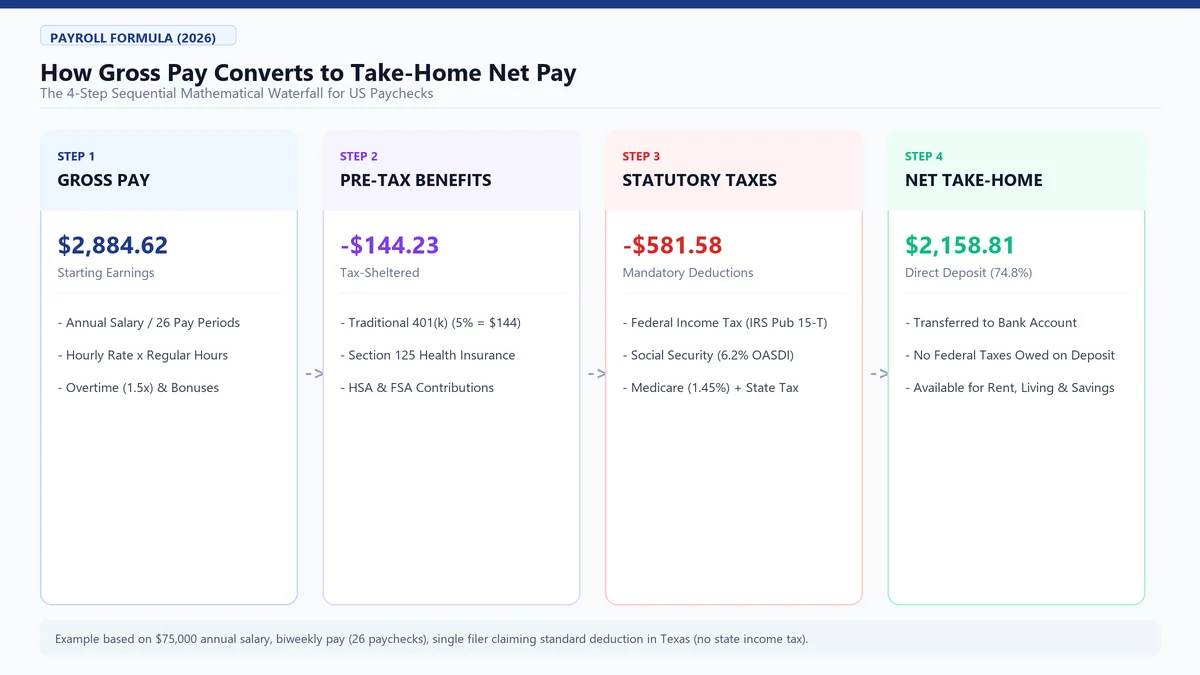
Start with gross pay. Subtract pre-tax deductions to get taxable wages. Subtract federal, state and payroll taxes, then post-tax deductions. What remains is net pay. The full walkthrough is in how take-home pay is calculated.

What to Check on Every Pay Stub
- Hours and rate match what you worked and agreed to.
- Overtime is paid at 1.5 times your regular rate where required.
- Social Security is about 6.2% of gross and Medicare about 1.45%. If not, ask payroll why.
- Federal withholding looks reasonable for your W-4. Compare with the paycheck calculator.
- Deductions are ones you elected, with correct amounts.
- YTD totals add up from one pay period to the next.
Pay Stub vs W-2
Your final pay stub of the year should roughly match your W-2. Box 1 of the W-2 is lower than gross pay because pre-tax 401(k) and health premiums are excluded. Boxes 3 and 5 (Social Security and Medicare wages) are usually higher than Box 1 because 401(k) deferrals are still subject to FICA.
What to Do If Something Looks Wrong
Contact payroll or HR in writing, with the pay period and the line in question. Keep every stub. If the error is not fixed, your state labor department can help. See late or missing paycheck for next steps.
Frequently Asked Questions
Is a pay stub the same as a paycheck?
No. A paycheck is the payment. A pay stub is the statement that explains how the payment was calculated.
What is YTD on a pay stub?
YTD means year to date, the running total of each earning and deduction since January 1.
Why is my net pay lower than gross pay?
Because taxes and deductions are withheld. See gross pay vs net pay.
How long should I keep pay stubs?
Keep them at least until you have checked them against your W-2 in January. Many people keep a full year, or longer for loan or rental applications.
Are employers required to give a pay stub?
Federal law does not require pay stubs, but many states do. Check your state labor department for its rules.
How these numbers are figured: 2026 IRS withholding rules (Publication 15-T) and state figures last verified September 2026. Results are estimates. Read the full methodology and sources.