Late or Missing Paycheck: What to Do
Paycheck late or missing? Steps to take, what the law says about paying on payday, and how to contact your state labor department or the US Department of Labor.
If your paycheck did not arrive on payday, act quickly and keep records. Most delays are administrative, but you have options if the problem continues.

First Steps If Your Paycheck Is Late
- Check your bank account and pending deposits. Direct deposits can take a day to appear.
- Confirm your pay date and pay period on your last pay stub or in your payroll portal.
- Contact payroll or HR in writing, with the date and amount expected.
- Ask when the payment will be made and whether a manual check is possible.
What the Law Requires
The Fair Labor Standards Act requires employers to pay non-exempt employees on the regular payday for the period. Many states add rules on how often you must be paid, how soon wages are due after a shift and when a final paycheck must be issued, and some add penalties for late pay. These vary by state, so check your state labor department.
If Your Paycheck Is Short
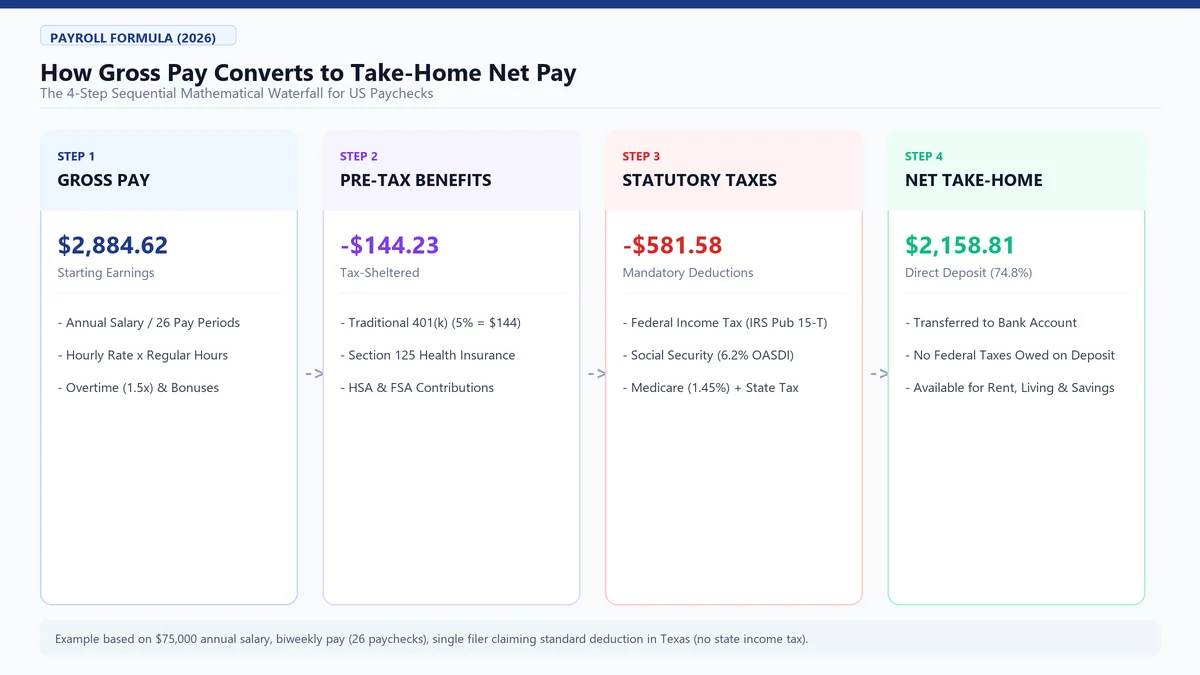
Compare gross pay, taxes and deductions with the paycheck calculator and your pay stub. A shortfall of a few dollars can come from rounding or benefits, but large gaps may be a payroll error or unpaid hours. Give the employer a written list of the missing hours.

When to File a Wage Complaint
If your employer does not fix the problem, you can contact your state labor department, or the US Department of Labor Wage and Hour Division at 1-866-487-9243. Keep pay stubs, time records, offer letters and messages about the missing pay.
Final Paychecks
When you leave a job, timing for the final paycheck depends on state law. Some states require payment on the last day or within days. Others allow the next regular payday.
Protect Yourself From Repeat Problems
- Track hours and shifts yourself.
- Keep copies of every pay stub.
- Verify direct deposit details after any bank change.
- Ask about the payroll cutoff date for hours and time-off requests.
Frequently Asked Questions
How long can an employer legally delay a paycheck?
Federal law expects payment on the regular payday. State laws set more specific deadlines and penalties, so check your state.
Can I quit if I am not paid?
Employment and wage laws differ by state. Consider speaking to your state labor department or an employment attorney before making that decision.
Who do I contact about unpaid wages?
Start with payroll or HR, then your state labor department, or the US Department of Labor Wage and Hour Division.
Why is my direct deposit late?
Common causes are bank processing, a holiday, a payroll cutoff missed by the employer or changed account details.
Does my employer have to pay me for hours already worked?
Yes. Wages for hours worked are owed, and wage claims can be filed with the labor agencies above.
How these numbers are figured: 2026 IRS withholding rules (Publication 15-T) and state figures last verified September 2026. Results are estimates. Read the full methodology and sources.